
How Often Should a Tankless Water Heater Be Flushed
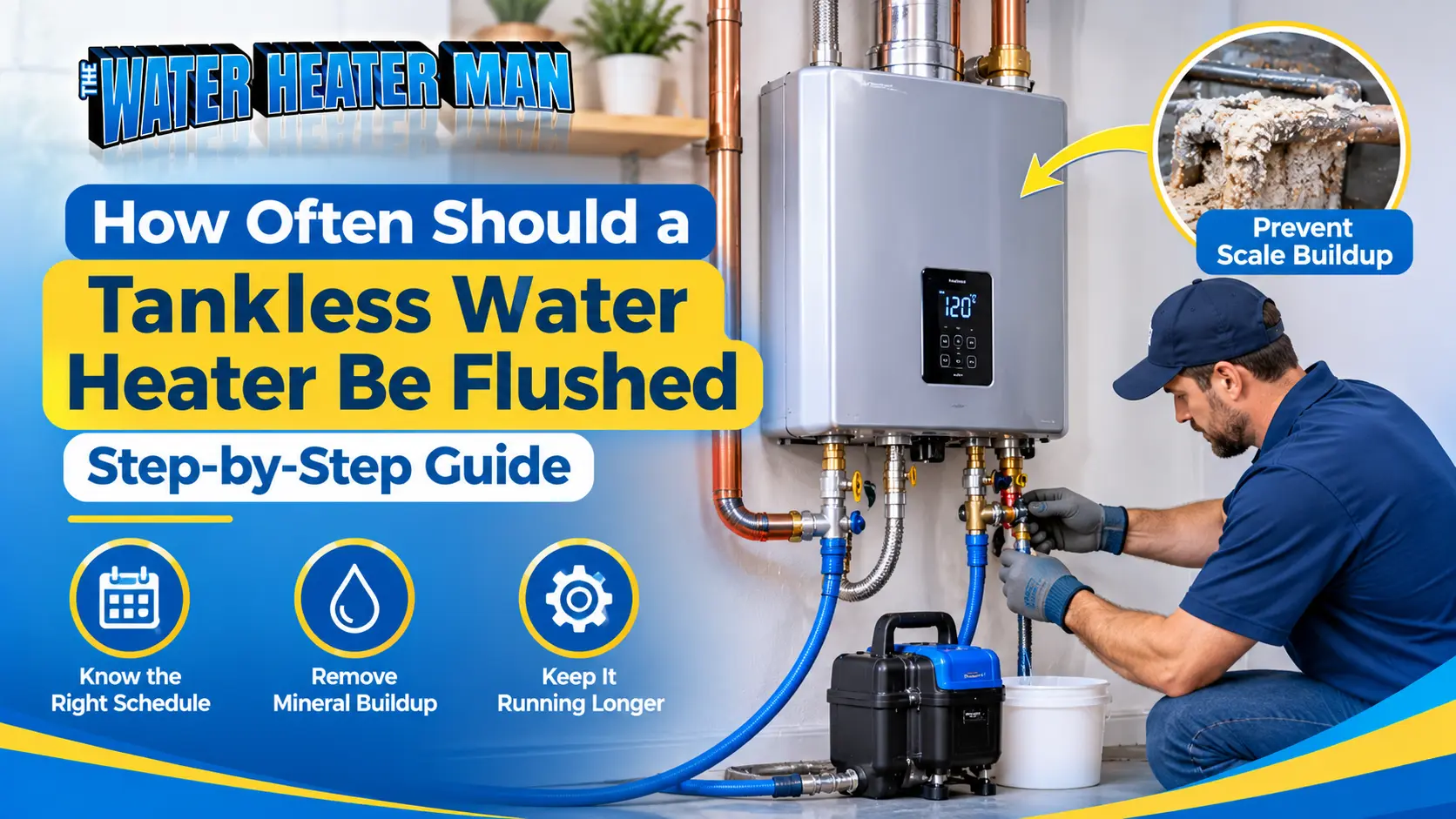
A tankless water heater can provide hot water for years, but it still needs regular cleaning. Over time, minerals in the water can build up inside the unit, especially around the heat exchanger.
This buildup can slow water flow, reduce heating efficiency, and lead to costly repairs if left untreated.
If you are wondering how often you should perform a water heater flush, this blog is for you!
With the help of this guide, you’ll learn when to flush your unit, how the process works, how long it takes, and when professional water heater maintenance makes sense.
| Keep hot water flowing. Call 916-215-0030! |
When to Schedule a Tankless Water Heater Flush
For most households, flushing a tankless water heater every 12 months is the best way to increase its lifespan. But the right schedule mainly depends on your water quality, household usage, and manufacturer’s recommendations.
If the water in your area is hard, you need to be more careful as the water contains minerals such as calcium and magnesium. When water heats up, these minerals can form a hard coating called scale inside the heater.
The more minerals your water contains, the faster scale can develop. Here’s a simple guide to know when to flush your tankless water heater:
| Water Conditions | Suggested Flushing Frequency |
| Soft water | Every 12 months, unless the manufacturer advises otherwise |
| Moderately hard water | Every 6-12 months |
| Very hard water | About every 6 months, or as recommended |
| Heavy daily hot water use | Consider more frequent inspections |
| Water treated with a softener | Usually annually, depending on water quality |
These are general guidelines. You should always check your owner’s manual because some manufacturers specify different maintenance intervals.
If you aren’t sure about your water hardness, a simple water test can help you decide whether your heater needs more frequent cleaning.
How Do You Clean a Tankless Water Heater?
Cleaning a tankless water heater mainly means removing mineral scale from the parts that come in contact with water.
Unlike a traditional tank heater, there is no large tank to drain. Instead, minerals can collect inside the heat exchanger and along narrow water passages.
A proper cleaning usually focuses on three areas:
- Descaling the heat exchanger to loosen calcium and other mineral deposits.
- Cleaning the inlet water filter to remove dirt or debris that may restrict water flow.
- Checking the unit for buildup, leaks, or other signs of wear while maintenance is being performed.
The descaling portion is completed by circulating an approved cleaning solution through the unit and then rinsing it with fresh water.
The exact cleaner and maintenance procedure depend on the manufacturer, so always follow the instructions provided for your specific model of tankless water heater.
How Long Should You Flush a Tankless Water Heater?
Many tankless water heaters require approximately 45-60 minutes of descaling solution circulation. But it mainly depends on the model you have.
Also, the total time duration can be longer because the technician must prepare the equipment, circulate the solution, rinse the system, and check its operation before flushing.
You should also not assume that running the pump longer will clean the heater better. If you’re doing it yourself, follow the manufacturer’s recommended flushing time and solution requirements.
Remember that flushing and rinsing are different steps. The cleaning solution removes scale, while the final rinse clears that solution from the heater.
| Need professional flushing? Book Your Service Today! |
How to Safely Flush a Tankless Water Heater: A Step-by-Step Guide
Flushing a tankless water heater is fairly straightforward when the unit has the correct service valves, but the exact steps can vary by model.
The universal process usually looks like this:
1. Turn the Heater Off
Shut off the power first. If the unit uses gas, follow the manufacturer’s shutdown instructions before doing anything else.
2. Close the Water Supply Valves
The heater needs to be separated from the home’s water supply so the cleaning solution can circulate only through the unit.
3. Hook Up the Flushing Hoses
The hoses connect to the service ports, and a small pump moves the cleaning solution through the heater.
4. Let the Solution Circulate
This is the part that helps loosen mineral scale inside the heat exchanger. The time it takes depends on the heater and the cleaner used.
5. Flush Everything With Clean Water
Once the scale has been loosened, fresh water is run through the unit to remove the cleaning solution and remaining debris.
6. Put the Heater Back into Service
The hoses are removed, the valves are reopened, and the heater is restarted according to the manufacturer’s instructions.
Note: All tankless water heaters are not set up in the same way. If you can’t clearly identify the service valves, or the unit doesn’t have them, don’t try to create your own flushing connection.
In that situation, professional water heater service is the safer option and can also help catch issues such as clogged filters, leaks, or heavier scale buildup while the unit is being cleaned.
How to Remove Sediment From a Water Heater
The right method depends on whether you have a tank or tankless water heater.
| Water Heater Type | What Builds Up? | How Is It Removed? |
| Tankless | Mineral scale inside the heat exchanger | Descaling with an approved solution |
| Traditional tank | Sediment that settles at the bottom | Draining and flushing the tank |
For tankless models, descaling helps dissolve mineral deposits inside narrow water passages. Cleaning the inlet filter can also remove trapped debris that restricts water flow.
If you notice white, chalky deposits on your faucets or showerheads, your water may contain high levels of minerals. That doesn’t automatically mean your heater is clogged, but it is a good reason to review your maintenance schedule.
If hot water flow drops, the temperature keeps changing, or an error code appears, have the heater inspected. A technician can find the cause and tell you whether it needs cleaning or repair.
What Happens If You Don’t Flush a Tankless Water Heater?
Skipping maintenance allows mineral scale to build up over time. Depending on the severity, this can affect heating performance and put extra strain on the heat exchanger.
Common warning signs include:
- Hot water that suddenly turns cold or changes temperature.
- Reduced hot water flow at faucets and showers.
- Longer waits for hot water than usual.
- Unusual operating noises or recurring error codes.
- A heater that struggles to meet your household’s hot water needs.
These symptoms can have other causes, so they don’t always mean your heater needs flushing. An inspection can help identify the actual problem before it gets worse.
Regular descaling also allows a technician to inspect filters, connections, and other accessible components. However, maintenance cannot prevent every breakdown or guarantee a specific lifespan.
Frequently Asked Questions
➢ Can I use white vinegar to flush my tankless water heater?
Some manufacturers allow undiluted white vinegar for descaling, but others specify particular cleaning products.
Never assume that every tankless heater accepts the same solution. Check your owner’s manual before using vinegar, and avoid household cleaners or chemicals that aren’t approved for the equipment.
If you’re unsure which product to use, an experienced water heater technician can select the appropriate solution.
➢ Does a tankless water heater need flushing if I have a water softener?
Yes, it may still need descaling. A water softener can reduce the minerals that cause scale, but it doesn’t eliminate every maintenance need. Your heater may still collect deposits or debris over time.
Follow the manufacturer’s schedule and have your water quality assessed if you’re unsure whether the current treatment is working effectively.
➢ Is flushing a tankless water heater worth the cost?
Regular flushing can help remove mineral buildup before it affects performance. It may also help prevent avoidable strain on the heat exchanger. However, flushing won’t fix worn components, electrical faults, or every cause of poor heating. A professional can inspect the unit, explain whether descaling is needed, and recommend water heater repair if another problem is responsible.
| Get expert tankless water heater maintenance. Call 916-215-0030! |
Takeaway
A yearly flush is a sensible starting point for most tankless water heaters, while hard-water conditions may call for more frequent cleaning.
Pay attention to changes in hot water temperature, unusual noises, and warning codes. More importantly, follow your manufacturer’s maintenance schedule rather than waiting for the heater to stop working.
Read More!
- Water Heater Lifespan: When to Repair vs. Replace
- Why Is My Water Heater Leaking?
- 6 Common Tankless Water-Heater Problems and Solutions
- Why Water Heaters Fail Suddenly (Without Warning Signs)
Need Professional Water Heater Service in Sacramento? Trust The Water Heater Man
Whether your unit needs routine cleaning or isn’t providing enough hot water, The Water Heater Man can help you determine the next step.
We operate under California Contractor License #641126 and have more than 25 years of experience in handling water heaters of all types.
As a BBB-accredited company, we offer:
- Water heater repair to diagnose and resolve heating problems.
- Water heater replacement and new installation when your existing unit needs replacing, or you’re installing a new system.
- Water heater maintenance to help keep your system running properly.
- Tankless water heater services, including installation, maintenance, and repairs.
If you’re looking for help with a tankless system, water heater repair, or water heater installation in Sacramento, we can recommend the right solution for your home.
Serving Our Clients Throughout the Greater Sacramento Area
| Rocklin | Roseville | Granite Bay | Lincoln |
Call 916-215-0030 to get in touch with owner Jay today and schedule your same-day water heater tune-up in Sacramento and other neighborhoods.