
How to Test and Replace a Water Heater Expansion Tank
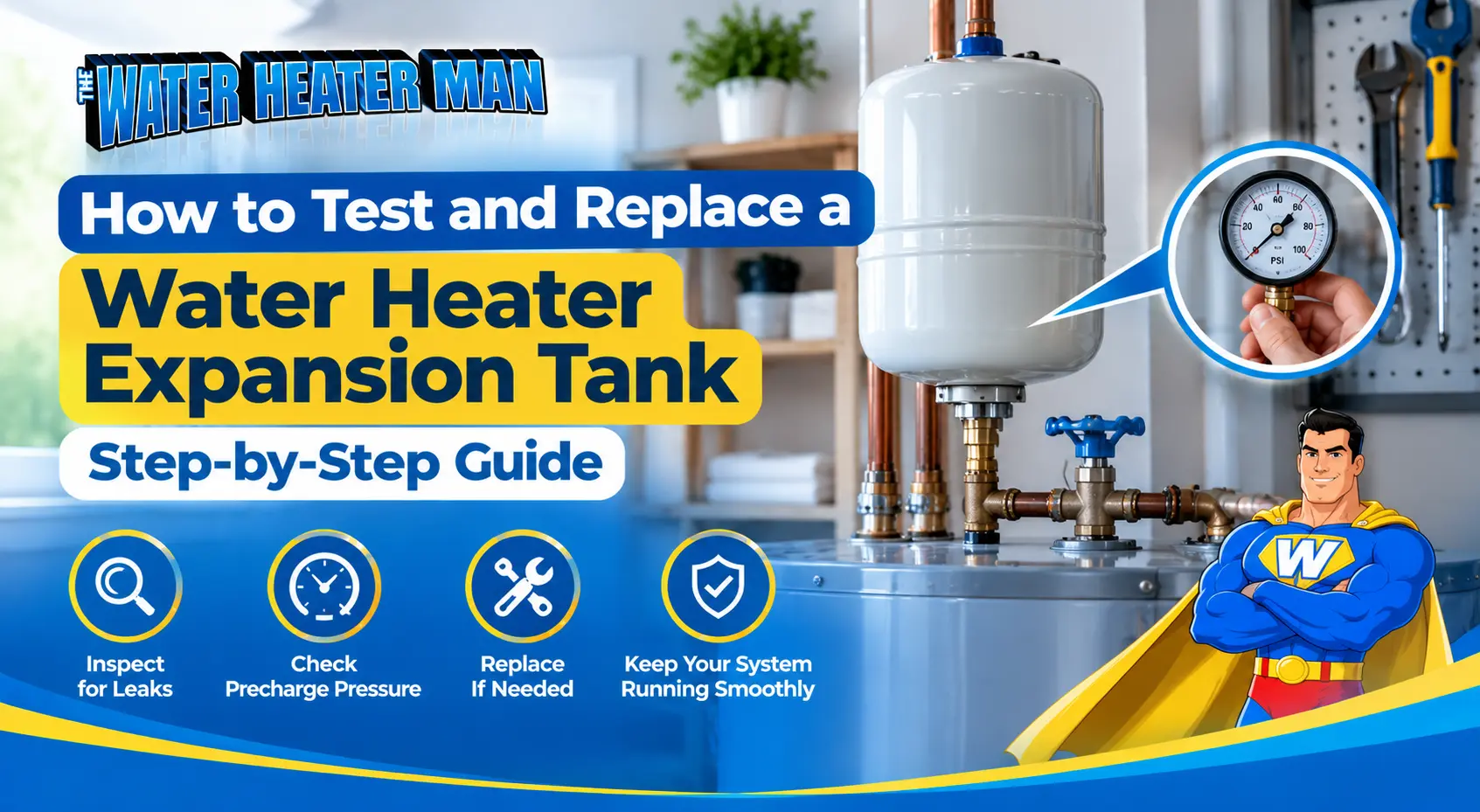
If your water heater makes unusual noises, your pressure relief valve keeps dripping, or you notice pressure changes whenever the water gets hot, the problem may not be the water heater itself. A worn or incorrectly pressurized water heater expansion tank can allow thermal expansion to put unnecessary stress on your plumbing system.
Usually, the expansion tank helps manage the pressure by giving the extra water volume somewhere to go as the water heats up. But when the tank stops working properly, pressure can begin to build in the system. Knowing how to test the tank can help you determine whether it is still working or needs to be replaced.
So, this guide explains what an expansion tank does, how to test one, how to identify a failed tank, and how to replace it safely. It also explains when an expansion tank problem may point to a larger water heater issue that requires professional attention.
| Get reliable water heater installation. Contact Us! |
What Is a Water Heater Expansion Tank?
A water heater expansion tank is a small pressurized tank connected to the cold water line serving a residential water heater. Its job is to give expanding water a temporary place to go when heating increases pressure inside the plumbing system.
Inside the tank, a flexible diaphragm separates an air chamber from the water coming from your plumbing system. Once heated, the water pushes against the diaphragm and compresses the air cushion. After the pressure settles, the stored water moves back into the plumbing system.
Overall, the expansion tank behaves as a pressure buffer that absorbs the pressure increase within the water heater. An expansion tank is also called a thermal expansion tank or a water expansion tank.
How Do You Know If Your Water Heater Needs an Expansion Tank?
Water expands on heating. In an open plumbing system, some of that expansion can move back toward the incoming water supply.
A closed system works differently.
A backflow prevention device, check valve, pressure-reducing valve, or similar component can prevent water from moving backward. When that happens, the expanding water increases pressure inside the plumbing system.
A properly functioning expansion tank gives the system a controlled place to absorb this additional volume. Without adequate pressure management, repeated pressure increases can stress other plumbing components, fixtures, valves, and connections.
What Are the Symptoms of a Bad Water Heater Expansion Tank?
A failed expansion tank does not always leak or look damaged. You may notice the problem through other parts of the plumbing system.
-
Water Around the Tank
Moisture around the tank, threaded connection, or nearby piping can indicate a leaking fitting or failed tank.
-
The Tank Sounds Waterlogged
A functioning tank needs an air cushion. If the diaphragm has failed, water may fill much of the tank.
To check, you can gently tap the tank. A tank that sounds full of water may have lost its air cushion. This is only a basic check and does not replace pressure testing.
-
The Pressure Relief Valve Keeps Dripping
A relief valve that repeatedly releases water can indicate excessive system pressure.
A failed or incorrectly charged expansion tank can contribute to this problem, but it is not always the cause. The relief valve, household water pressure, water temperature, and other components should also be checked.
-
Pressure Rises When the Water Heats
If your plumbing pressure increases noticeably while the water heater is heating, thermal expansion may not be properly controlled.
-
Repeated Plumbing Leaks
Frequent leaks around fittings, valves, or connections may be related to pressure problems. An expansion tank can be one possible cause, but the complete system should be checked before replacing the tank.
How Do You Test a Water Heater Expansion Tank?
Step 1: Check the Condition of the Tank
Check the tank for rust, moisture, corrosion, signs of water leakage, damaged fittings, or physical damage. Also inspect the connection between the tank and the plumbing.
Step 2: Measure Household Water Pressure
Check the pressure of the plumbing system by using a water pressure gauge. Do not judge water pressure by how strong the water feels from a faucet. The pressure reading is important because the expansion tank precharge needs to match your system’s water pressure.
Step 3: Shut Off the Water Supply
Turn off the cold water supply serving the water heater to relieve the water pressure acting against the diaphragm:
- If you have a gas water heater, you should follow the manufacturer’s instructions for safely placing the appliance in a non-heating setting.
- In the case of an electric water heater, you can switch off the electrical supply before working on the appliance.
Step 4: Relieve Pressure From the Plumbing
Turn on a nearby hot water faucet and let the pressure drop. You may need to drain a little water from the water heater, depending on how the system is set up. Make sure there is no water pressure left in the expansion tank before checking the air pressure.
Step 5: Check the Expansion Tank Precharge
Find the Schrader valve on the expansion tank. It looks similar to the valve on a vehicle tire.
Use a suitable pressure gauge to check the air pressure. Compare the reading with the plumbing system pressure and the manufacturer’s specifications.
- If water comes out of the Schrader valve, the internal diaphragm has likely failed. In that case, the expansion tank generally needs to be replaced.
- If the tank has simply lost some air pressure but the diaphragm is intact, the pressure may be adjustable according to the manufacturer’s instructions.
| Get expert expansion tank service. Call 916-215-0030! |
What Pressure Should a Water Heater Expansion Tank Have?
There is no single pressure setting that works for every installation. Most residential plumbing systems operate at around 40 to 60 psi, although the pressure can vary from one home to another.
The right expansion tank precharge depends on the normal static water pressure and the manufacturer’s specifications. So, you should always measure your household water pressure before adjusting the water heater expansion tank.
Adding air without knowing the system pressure can leave the tank incorrectly charged.
Too little air can allow too much water into the tank, while too much air can prevent it from accepting the expanded water effectively.
Therefore, it’s important to set the tank according to the requirements of the specific plumbing system.
When Should You Replace the Water Heater Instead?
A failed expansion tank does not automatically mean you need a new water heater because the expansion tank can usually be replaced separately.
However, water heater replacement may need to be considered when the appliance has several problems at the same time.
| Expansion Tank Situation | What It May Mean |
| The tank pressure is incorrect, but the tank is intact. | The tank may only need proper adjustment. |
| The tank has lost its air cushion. | The diaphragm may have failed. |
| Water comes from the Schrader valve. | Tank replacement is generally indicated. |
| The tank connection is leaking. | The connection or tank may require service. |
| The water heater is also leaking. | The water heater condition needs evaluation. |
| The water heater is old and needs repeated repairs. | Replacement may need to be considered. |
| The water heater has widespread corrosion. | There could be a larger system problem. |
The right choice depends on the condition of the complete water heating system, not just one symptom.
If the existing unit is reaching the end of its service life, a professional can also discuss water heater installation options based on your home’s hot water needs, fuel source, available space, and budget.
Frequently Asked Questions
➢ What Size Water Heater Expansion Tank Do I Need?
It depends on the size of your water heater, your home’s water pressure, and how the plumbing system is set up. Check the tank manufacturer’s sizing chart to find the right match for your system.
➢ Why Does the Pressure Relief Valve Keep Dripping?
A dripping pressure relief valve can have several causes, including excessive pressure, thermal expansion, high temperature, or a faulty valve. The expansion tank, household water pressure, pressure-reducing valve, relief valve, and water heater should be checked to identify the actual cause.
➢ What Tools Do I Need to Test an Expansion Tank?
You will usually need a water pressure gauge, tire pressure gauge, adjustable wrench, hose, bucket, and air pump. A towel can also help catch small amounts of water during the test.
If the tank is hard to reach, badly corroded, or connected to piping that is under strain, it is better to have a professional handle the inspection or replacement.
Takeaway
If your expansion tank is leaking or your water pressure keeps changing, you must pay attention to it. A quick inspection can tell you whether the tank is the problem or whether something else needs attention.
Fixing the issue early can also help prevent unnecessary stress on the plumbing system. If the water heater is older or has other problems, it is worth checking the whole unit before deciding what to replace.
Read More!
- Water Heater Lifespan: When to Repair vs. Replace
- Water Heater Making Popping or Rumbling Noises: What It Means
- Why Is My Water Heater Leaking?
- Why Water Heaters Fail Suddenly (Without Warning Signs)
Need Water Heater Help in Sacramento? Trust the Water Heater Man
Not sure if your expansion tank needs a simple adjustment or replacement? The Water Heater Man can help!
With over 25 years of experience, our licensed technicians (#641126) can check the tank, water pressure, connections, and water heater to find the source of the problem.
Water Heater Man is a BBB-accredited company that specializes in
- Water heater repair
- Water heater replacement & new installation
- Water heater maintenance
- Tankless water heater services.
Thinking about tankless water heater installation in Sacramento or replacing an aging water heater? Our skilled technicians can assess your current system and help you understand which option fits your home.
If you are dealing with a leaking expansion tank, pressure problems, or an aging water heater, give us a call at 916-215-0030 to schedule an inspection.
Areas We Serve:
| Rocklin | Roseville | Granite Bay | Lincoln |